
Are you ready to join the world’s largest treasure hunt? In this introduction to geocaching we’re going to give you an insight into what geocaching is, how to geocache and why you should incorporate it into your travel plans!
This post may contain affiliate links, which means I may receive a small commission, at no cost to you, if you make a purchase through a link. Find out more here.
How to Geocache
We’ve pulled together everything you need to know about geocaching so you can find your first geocache today!
What is Geocaching?
Geocaching is often described as the world’s largest treasure hunt. The aim of the game is to use the geocaching mobile app or co-ordinates input to a GPS to locate containers known as caches. Geocaches are hidden right across the world, so you can play no matter where you are.
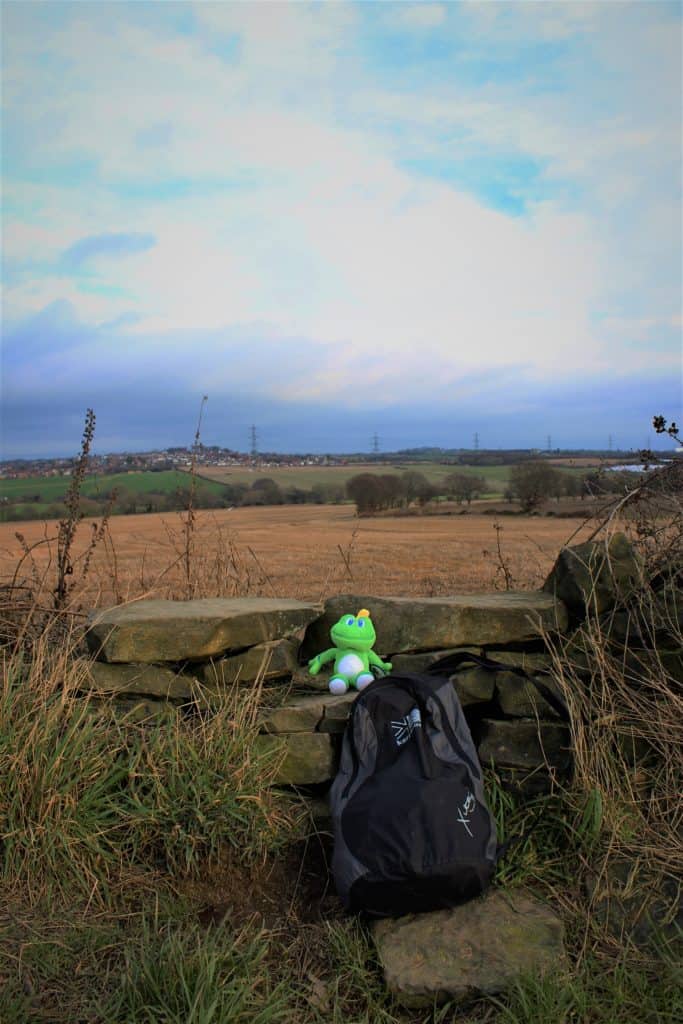
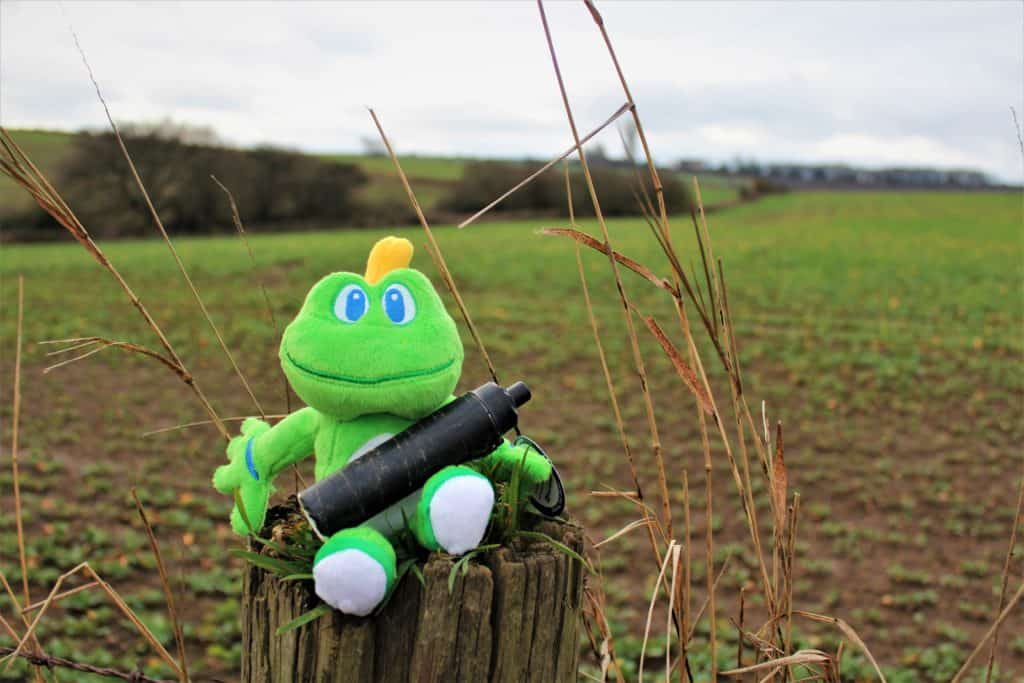
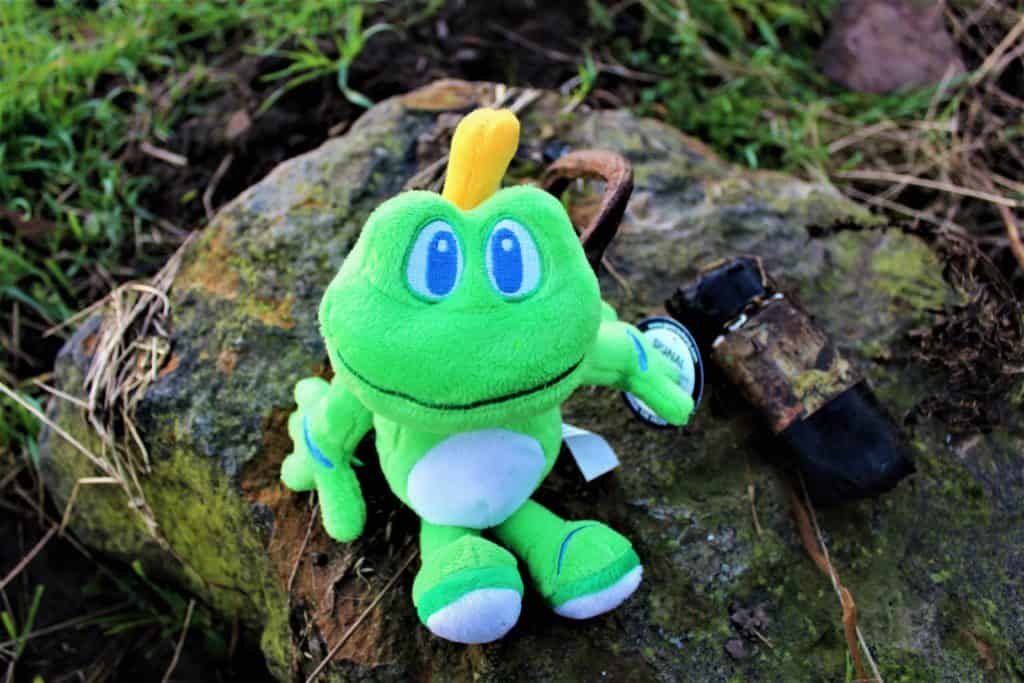
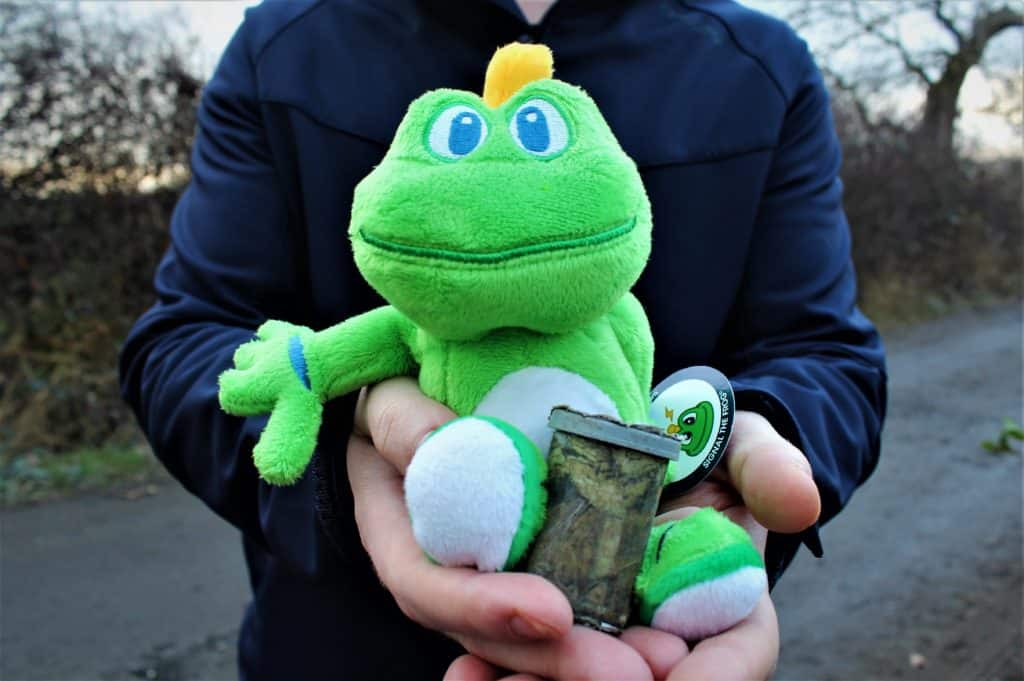
This little green frog is Signal. He is the official geocaching mascot! He joins us on geocaching journeys and is going to help us show you how to geocache.
How to Start Geocaching
It is easy to start your geocaching journey. All you need to do is create an account on geocaching.com and download the mobile app.
When you create an account you will have two options, a basic or premium account. The basic account is fine for when you are starting out. You’ll be able to try geocaching out and find your first few caches with the basic option, which is free.
After some time you may choose to invest in upgrading to a premium account. Some caches are only available to find on the premium version. But for the price of $9.99* for 3 months of $29.99* for 12 months it is a worthwhile investment if you are doing a lot of geocaching.
Geocaching Basics
Once you’ve got your geocaching account and mobile app set up, you’ll just need to know a few basics of caching to get you started.
Choosing and finding a cache
When you open the app, a map page will load with geocaches plotted on it. You can center on your location, or search by location name to bring up caches in the search area.
When you have identified the area you want to search, tap on the cache symbol to bring up the description. This will tell you the difficulty of the hide, terrain and the size of the cache. It will also have a description of the cache and the activity log, recording all of the recent finds.
If you want to search for the cache, hit start, and the app will navigate you to the cache. Simply walk in the direction of the cache as indicated on the screen. Once you are in close vicinity to the cache, you’ll need to do some hunting to find the exact hiding place of the cache.
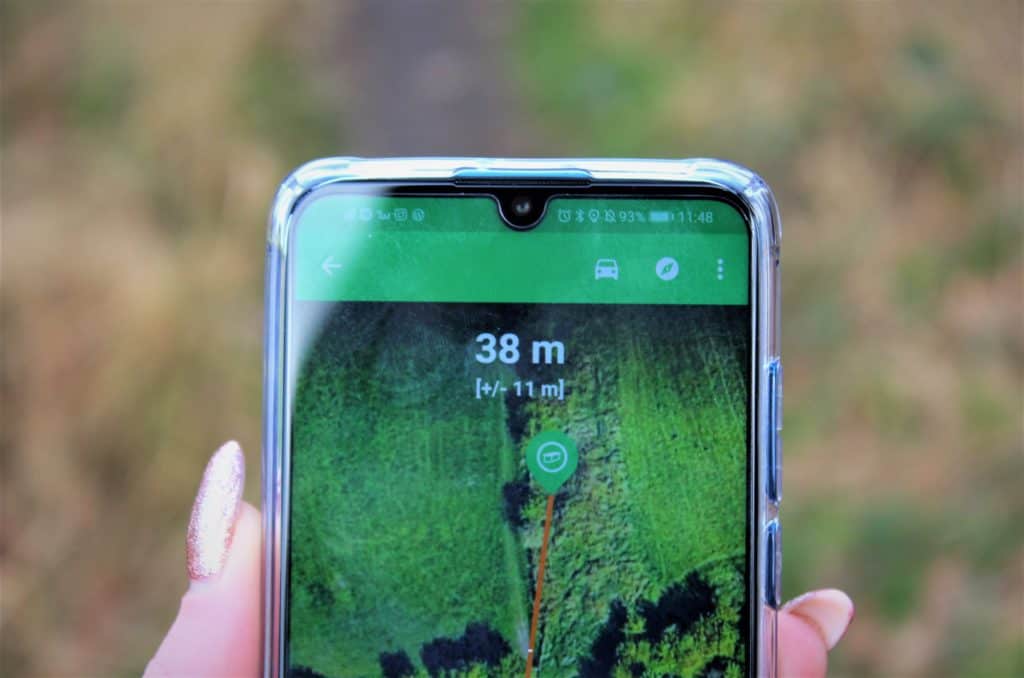
Once you locate the cache, you can sign the physical log in the cache (see below) and record the find on your app by selecting ‘log’ and ‘found’ and the cache symbol will be replaced by a smiley face. If you can’t locate the container, you can select the ‘DNF’ (did not find) option. You can add a comment and/or photo to your digital log also.
Types of Geocache
There are several different types of geocaches you can find, which are identified on the map by different symbols. We’ve listed some of the most common ones below.
The most basic type of cache is a traditional cache. This is a container hidden at the identified location and will vary in size.
A mystery or puzzle cache which involves solving puzzles to get the required co-ordinates to direct you to the physical container.
A multi-cache requires you to visit two or more locations with the final being the physical container.
An Earth cache is a cache celebrating a special geological location. You will be directed to a point of interest to learn about a unique feature of the earth. In most cases Earth caches do not lead to a physical cache, instead, you will typically need to answer question about the location to log the find.
What is in a geocache
You will find a number of items inside a geocache, depending on the type and size of the cache you have located.
Log
All physical caches will contain a log. This is used to document your cache find. On the log, you will have space to write the date and your geocaching username.

Swag
As well as the log, larger caches may also contain some swag – small goodies you can take from the cache and leave something else in return.
It is worth noting that there are some guidelines surrounding swag. Firstly, it is good practice to only swap items of similar or higher value. In the image below, Signal removed the heart keyring from the cache and add the Hello Kitty figure in its place.
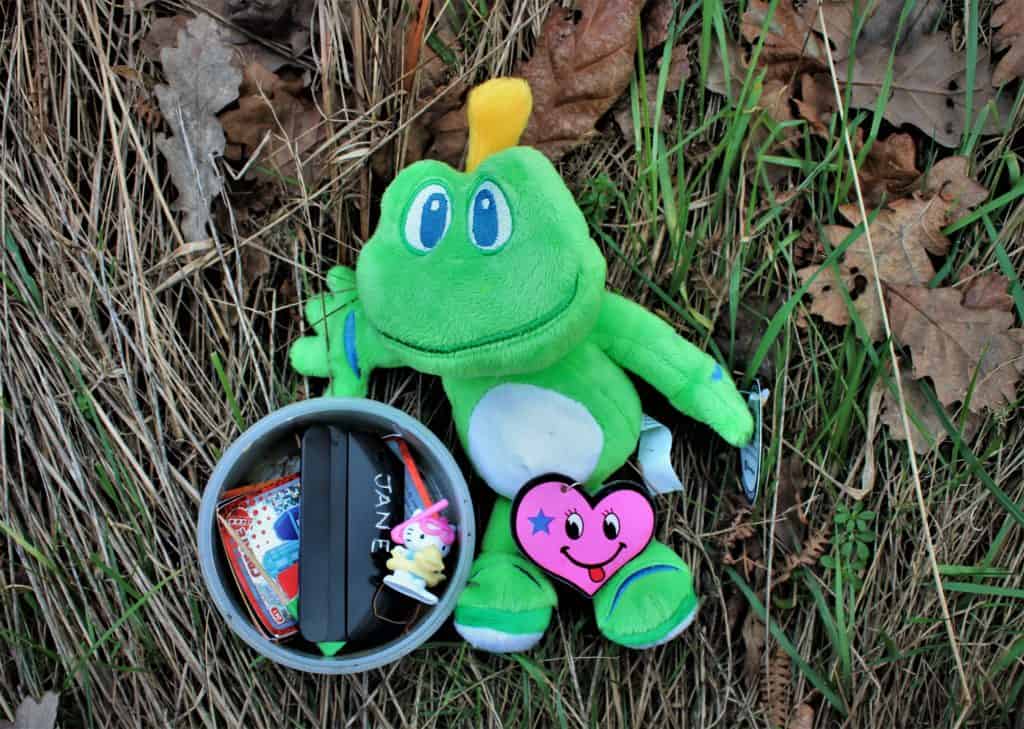
There are also some limitations on what swag you can place in a cache, for example, you cannot leave anything that has a strong smell, such as food, which might attract animals. You also need to make sure anything you leave is safe, so nothing explosive and no knives, including pocket knives.
Travel Bugs and Trackables
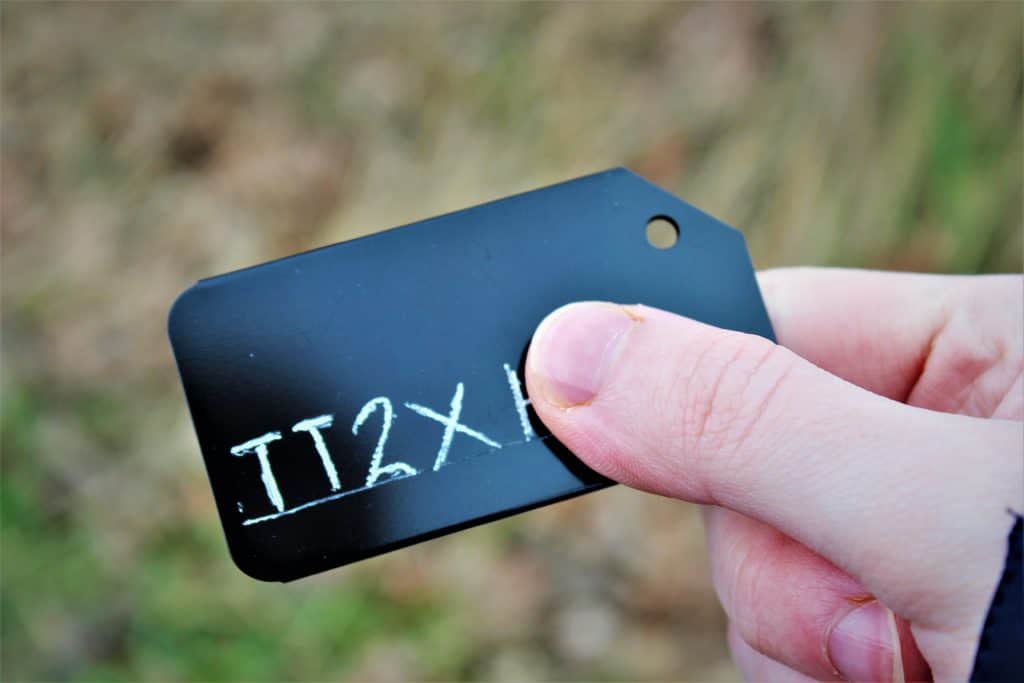
Travel bugs and trackables are items placed in caches that have a unique trackable code. If you find a trackable, you can pick it up and log the collection on your account.
You can then move it on to a new location by placing it in a new cache. Once you’ve placed it remember to update the trackable log with the new location so the owner of the trackable can follow its progress.
Tips for Looking for a Geocache
When you first start looking for geocaches, you can feel a little bit lost, so here are some expert tips to help you:
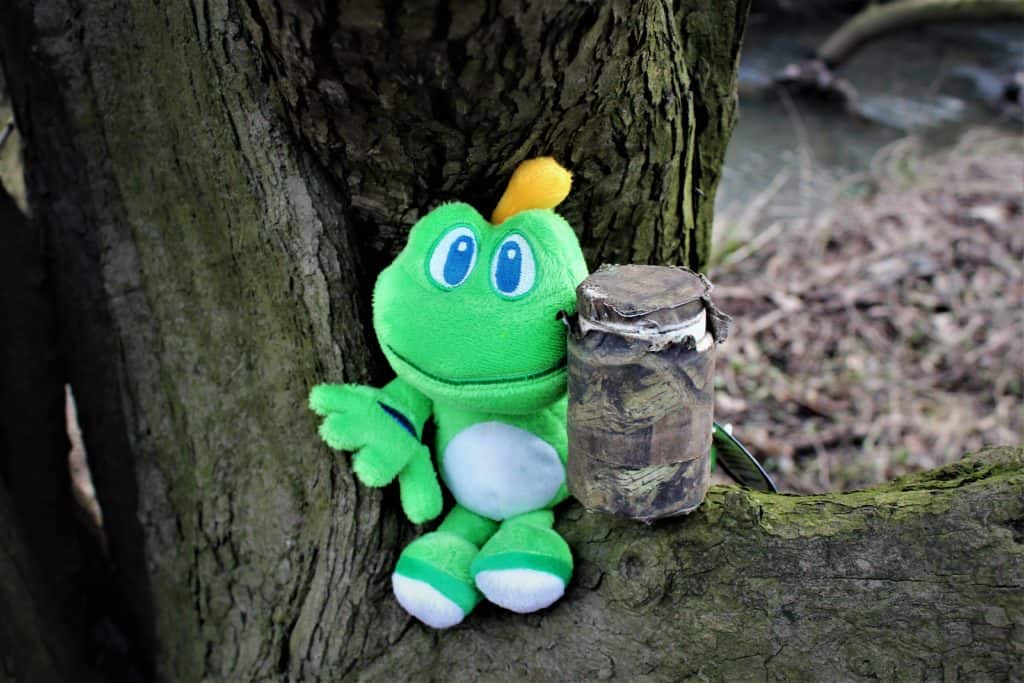
- The container you are looking for could be anything from a small canister on a magnet or keychain, to a larger ammo tin. Most caches are micro to medium sized. Tupperware is a popular choice and it may be covered in cameo tape.
- If you’re looking for caches in rural areas, the most common spots are tucked within trees or behind fence posts.
- If you spot a rock that looks out of place, it is a good place to start…check underneath it!
- If you get stuck trying to locate a cache, most caches will have a hint you can access on the app to give you a helping hand.
- Ivy is a geocacher’s worst enemy!
As you gain more geocaching experience, you will know what to look out for and will find you can locate caches much quicker!
Continuing Your Geocaching Journey
With new caches being placed almost daily, and a whole world of caches to explore, you’re never going to run out of caches to find! But as you gain more experience caching, you may find you want to try your hand at some other geocaching fun…
Once you are an experienced cache hunter, you can try your hand at becoming a cache owner. This is usually recommended for cachers who have found 100 caches or more.
This means that you can hide your own geocache for others to find. You will be responsible for maintaining the cache such as replacing the log when full and making sure it isn’t damaged or missing. For tips on hiding caches find out more here.
You can also get your own travel bug or trackable and release it out into the wild. Through your geocaching account, you will be able to follow your trackable’s journey as it travels from cache to cache.
Geocache Speak
You will soon discover that geocaching has a language of its own! We’ve outlined the basic terms and acronyms for you below:
Muggles – non-geocachers. Discretion is the name of the game when it comes to geocaching. If you encounter muggles on your geocaching adventure don’t give away your mission!
FTF – first to find. The first geocacher to find a new cache.
TFTC – thanks for the cache. A common expression of thanks left in geocaching online logs.
DNF – did not find. A note in the online cache log to indicate that a geocacher was unsuccessful in locating the geocache.

BYOP – bring your own pencil. This cache may not be big enough to contain a pen or pencil to sign the log so you’ll need to bring your own. We’d always recommend having one on hand on a caching trip!
TNLN – took nothing, left nothing. An indication that the geocacher chose not to take any swag from the cache and left nothing in return.
TB – travel bug. A kind of trackable object that you can collect and move to another cache. You will need to log the movements via the app so the travel bug owner can follow its journey.
GC – geocoin. Like a travel bug, it is a coin with a unique trackable code. If you move a geocoin to a new location don’t forget up update the geocoin log so the owner knows where it is.
CITO – cache in, trash out. A geocaching initiative to encourage picking up trash while caching to clean up our parks and green spaces. Special CITO events are run periodically at various locations throughout the year.
Why Go Geocaching?
Geocaching is a great way to get outdoors. If you’re not a regular walker or you only usually get outdoors in the summer, Geocaching is a great way to introduce more outdoor activity into your lifestyle. Hunting for geocaches while you are out and about makes a walk more exciting.
You can also find geocaches in a range of locations. While many geocaches are located in remote locations such as public footpaths through fields and woodlands, you can also find urban caches. Urban caches are located in more populous areas such as cities, so if you don’t fancy wading through mud you can always grab a quick cache on your lunch break instead!
The other unique thing about geocaching is the universal appeal. Everyone from families, couples, dog walkers or solo travelers can get involved.
Geocaching and Travel
Geocaching is a great pastime for those who love to travel. No matter where in the world you visit, there is likely to be a cache nearby.
The geocaching app also recognises when caches are collected in different geographic locations, such as different countries and different US states. Every time you find a cache in a new region you will be awarded a digital souvenir. You can build up your collection of souvenirs by finding caches on your travels!
Also, if you happen to be travelling to the Pacific Northwest, you can visit Geocaching HQ in Fremont, Seattle. At the HQ there is a photobooth log to document your visit, the HQ cache with a unique digital souvenir, a cache tour, and a shop – you can even pick up your own signal to take with you on geocaching journeys!
How to Geocache: Time to Get Started!
So we’ve summarised all of the geocaching basics so you can get started on your geocaching journey. Which cache will be the first one you find?
Love it? Pin it!
Did you like our introduction to geocaching? Be sure to follow Get Lost on Pinterest for more!



Hello, I’m Hannah! I’m a writer and photographer who loves experiencing the wonders of Yorkshire. My guides will help you escape from your daily routine by showing you that you don’t have to go far to find an adventure.
Wow! I kept saying the term geocaching and kept wondering what it was. Such an intricate game! I will certainly take a look at the app to see if I can start incorporating it into our adventures.
Geocaching is a lot of fun! We hope you have an opportunity to try it out and love it as much as we do!
This really sounds like a lot of fun! I never heard about geocache, and I was super shocked how cool this actually is. Need to try it out too!
Geocaching is definitely fun and really easy to get started. We hope you get to try it out! Good luck finding your first cache!
I knew nothing about Geocaching. It sounds kind of fun.
It is definitely fun (although a little frustrating at times when you can’t find the cache!) We hope you get to give it a go and enjoy it!
Great post! I used to go geocaching a lot when I was younger and I really enjoyed it. 🙂
Krystianna @ Volumes and Voyages
Hi Krystianna! It’s always good to find another geocacher! We’re glad you enjoyed the post 🙂
I’ve been a bit slack on the Geocaching lately, but I have some awesome stories about cache finds in Asia. I even have a story involving the police from the US, haha.
Geocachers have the best stories! We’re surprised we’ve never been reported for strange behavior when we’ve been caching! We’re not always as discrete as is recommended!
What a fun post! I’ve heard of geocaching but didn’t really understand what it was about until now! I think I might try it, thank you! 😁
We’re glad you like the post! If you give geocaching a go be sure to let us know what you think! It is a lot of fun and a great excuse to get out and about!
That’s exciting. I have to try this one!
We hope you enjoy it if you give it a go!